Why I love Virgins
Why I love Virgins
There are new virgins in the market, every year. A virgin is a stock that has never seen a significant rally since its IPO listing. It may have happened that you applied for a IPO because the company was very good on paper but even after applying from a bunch of different accounts, you could not get an allocation.
Personally i never bought or applied for an IPO but we at swiing has been profitably trading these newly listed stocks. There is specific set of rules to apply here in order to enter and exit a virgin stock. And i am here to teach you that. Lets begin.
After a new listing there are only two things that can happen to a stock: 1) The interest is high and stock opens and continues to make new highs. 2) The interest was only for the initial listing gains and the stock starts to dump after listing, making a new low after every few days.
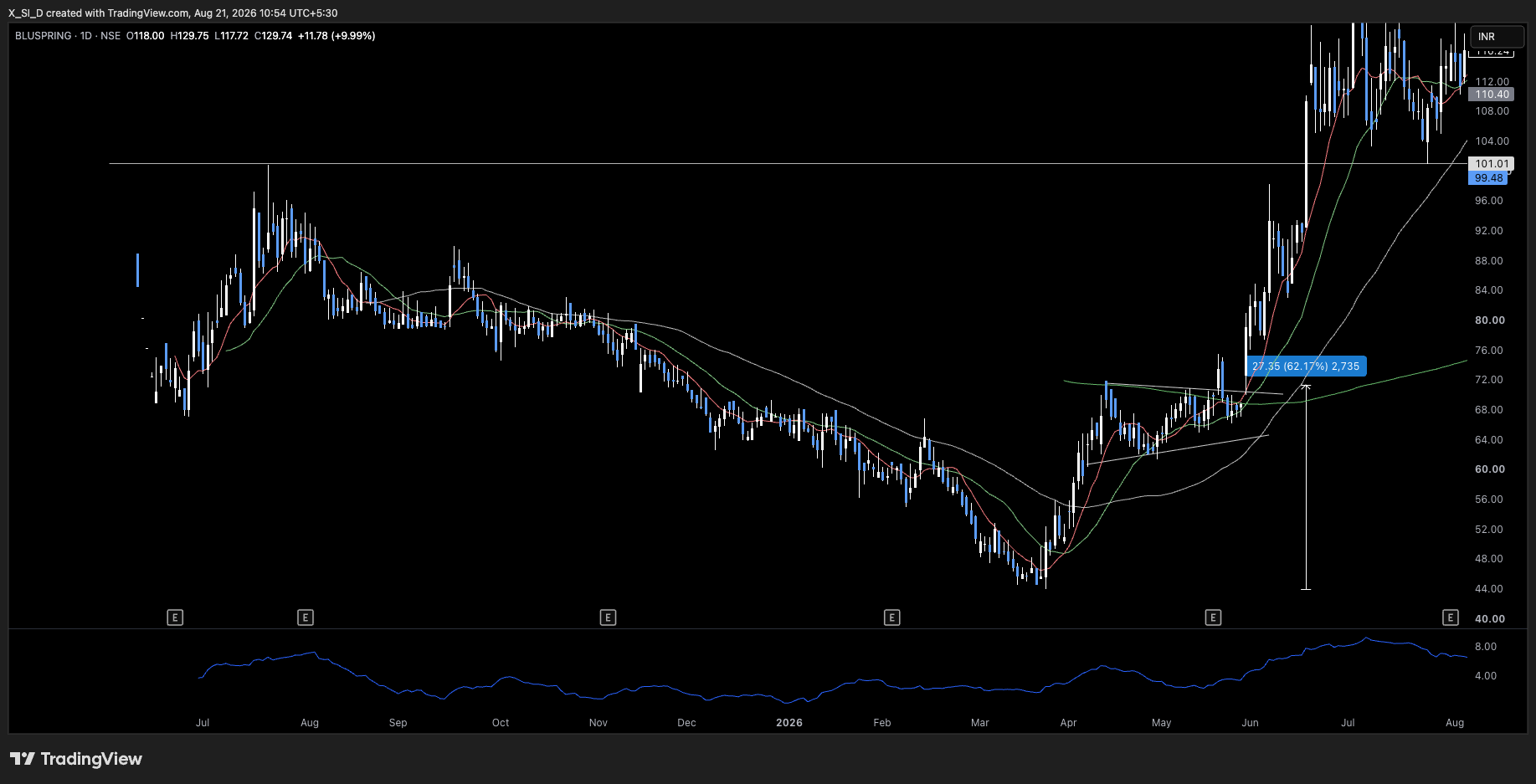
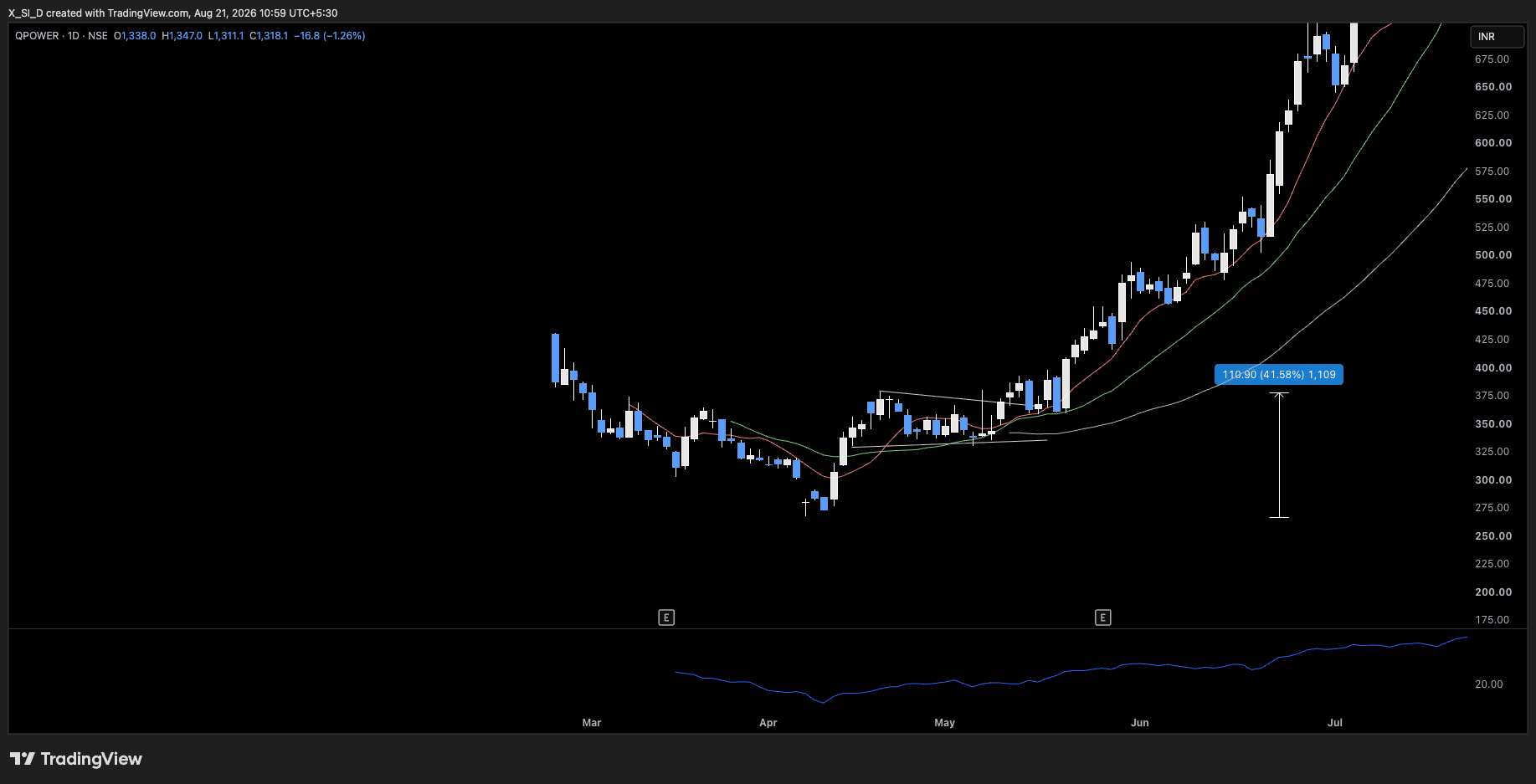
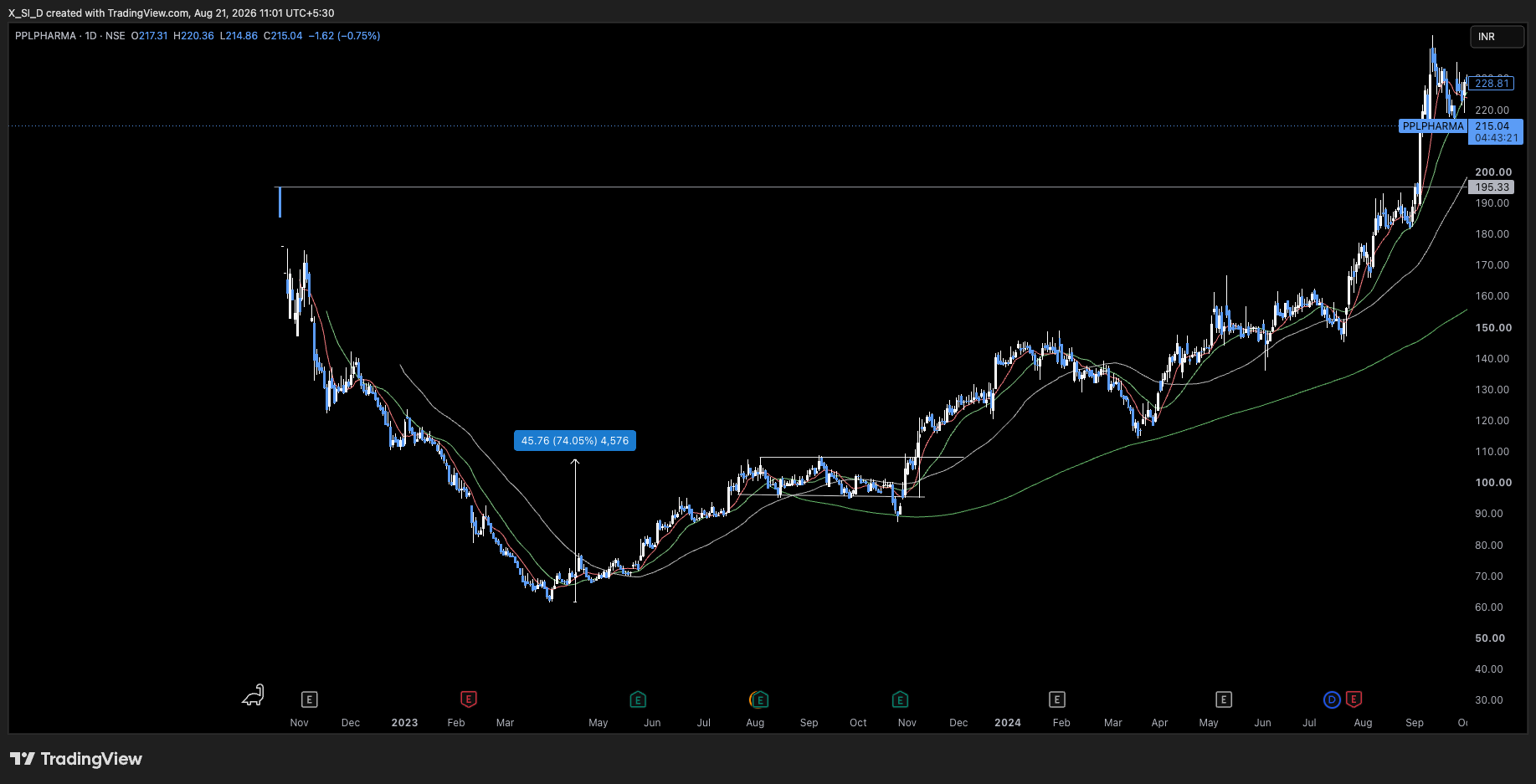
Now, we are not interested in the first category as it keeps going up with high volatility and the risk-reward is not worth it. The more a stock goes up after listing, the more it's valuation increases hence the more risk apetite you will need to buy it. So we don't play with these stocks, let them go as high as they want. I am interested in the second type of stocks, which see a significant decline after listing as the people who bought the IPO starts to exit with their profits. Often, you will see price action patterns like these:
1) BLUSPRING
 2) QPOWER
 3) PPLPHARM
Alright, enough of the theory now let's get to the fun part, HOW TO BUY THESE STOCKS AND PROFIT FROM THEM?
I will tell you what, entry and exit criteria of a trading system should not be as hard as it seems. SIMPLE RULES WORKS THE BEST. So, we are going to keep it simple and easy to understand. You need 3 things: 1) % gains from the absolute low 2)Breakout Entry 3)Exit.
To filter out strong candidates, we run a scan for stocks which are up min 30%-50% from their lows. As these stocks are up significantly from their lows, they gain momentum which often carries them up even further. It's just like Newton's first law of motion: an object in motion, stays in motion.
Now the first part of filtering these stocks is done, we move to the entries. For hunting an entry, look for the stocks which are going through a consolidation after their rallies off the lows, ideally a consolidation of 2-8 weeks. You can enter or buy that stock once it breaks out of the consolidation with significantly higher volume on breakout day.
Most of these stocks will never make a new high and will keep going even lower. Your job is to get your profit and exit before that happens. After the breakout from the consolidation, you can expect a bullish continuation move of 4-40%. I call it the 440 RULE. This is a wide range and stocks can start to lose their motion and move against you at any part of the rally. So you need to time your exit. Look for bearish signals like high volume on a red day or high % red daily candle since the start of the rally. Once you find them, exit and enjoy your sweet profits.
The real edge comes from spotting weird, unconventional patterns or anomalies that nobody else is looking at. The obvious stuff analysts chase is already played out everyone and their dog is doing it, so it’s worthless. You need structural edges instead. Once you find those, the exact entry and exit points barely matter.
You’ll only spot those anomalies if you’re willing to completely change the way you see things and that’s the hardest part of all.
So if you want a strategy that actually prints money, go look for the Virgins.
Comments (1)
Nice Strategy